Giza Pyramids: A Journey Through Time and Civilization
Giza Pyramids: A Journey Through Time and Civilization
From the golden sands of Northwest Egypt, the Giza Pyramids rise like silent sentinels of eternity, standing for over 4,500 years as the most enduring monuments of human ambition. More than ancient tombs, they embody the zenith of Old Kingdom engineering, religious belief, and societal organization. This journey through history explores how these monumental structures were conceived, constructed, and revered—a timeless narrative inscribed in stone.
The heart of Giza’s legacy lies in the three principal pyramids: Khufu, Khafre, and Menkaure, each a testament to the power and vision of the pharaohs who built them. Built during Egypt’s Fourth Dynasty, circa 2600–2500 BCE, these colossal structures were not merely burial places but cosmic symbols linking earth and the stars.
Origins in the Age of Pharaohs: Engineering the Eternal
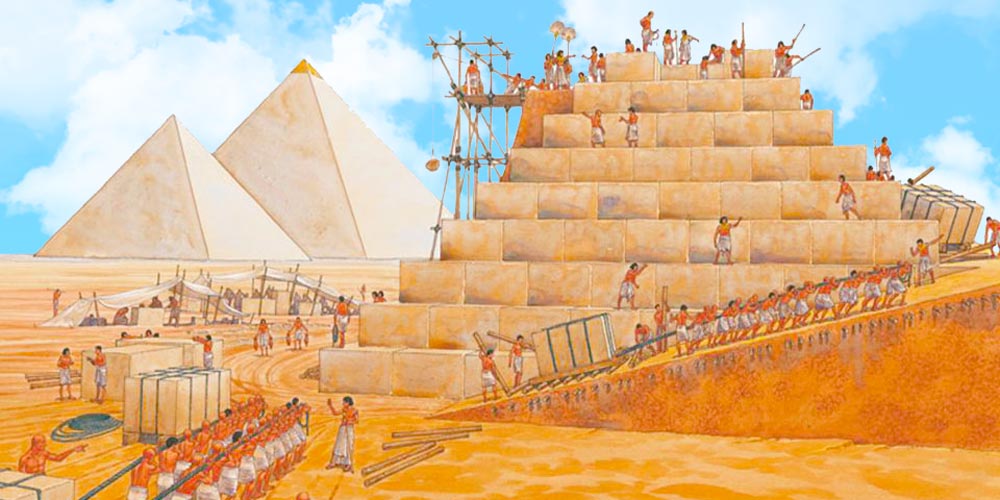
The construction of the Giza Pyramids marks a transformative era in human history, when Egypt evolved into a centralized state capable of mobilizing tens of thousands of laborers, architects, and engineers.Contrary to popular myth, the pyramids were not built by slaves but by skilled workers—farmers during the inundation season, seasonal laborers, and specialized artisans. Archaeological discoveries at nearby worker villages reveal bakeries, medical facilities, and administrative records, underscoring the sophisticated organization behind the project. “The pyramids embody the pharaoh’s divine mission,” explains Dr.
Zahi Hawass, prominent Egyptian archaeologist. “They were not just tombs—they were stairways to the heavens, ensuring the pharaoh’s ascension to join the gods.” Each pyramid required precise astronomical alignment. The Great Pyramid of Khufu, the largest, originally stood 146.6 meters tall, aligned almost flawlessly with true north.
Its base spans 230 meters per side, with stones weighing up to 80 tons—transported via rivers and sledges over carefully prepared tracks. The precision reveals an advanced understanding of geometry, astronomy, and physics, achieved without modern tools.
Technological Marvels and Labor Realities
Building the pyramids demanded engineering innovation far ahead of their time.Workers quarried limestone from nearby Tura, using copper chisels and wooden wedges soaked in water to split stone. Internal chambers, relieving passages, and intricate casing stones reflect complex design adapted to both structural integrity and ritual purpose. The workforce operated under structured supervision.
Seals found at the site show that overseers recorded daily quotas, tool distribution, and rations—functions suggesting a bureaucratic system managing large-scale labor. This organizational sophistication points to an early form of project management unrivaled in the ancient world. The construction process unfolded in phases, often layered over decades, with each pharaoh’s pyramid improving upon his predecessors’ achievements.
Khafre’s pyramid appears slightly taller due to a higher original base, while Menkaure’s, the smallest, reveals a more restrained architectural ambition consistent with later shifts in royal power.
Beyond Mortuary: Cubes of Cosmic Significance
More than monumental tombs, the Giza pyramids functioned as part of vast mortuary complexes. These included temples for ritual offerings, causeways linking to the Valley Temple, and wooden boat pits—such as the two intact 43-foot solar barges discovered near Khufu’s pyramid—believed to carry the pharaoh’s soul across the sky.The pyramids were embedded in a larger religious landscape aligned with celestial bodies. Orion’s Belt, associated in ancient Egyptian belief with Osiris, the god of the afterlife, mirrors the pyramids’ orientation—a cosmic alignment reinforcing spiritual doctrine. “These monuments were not isolated; they formed part of a sacred geography,” says Dr.
Kate Spalding, lead Egyptologist at The British Museum. “Their placement and design reflected a deep understanding of time, space, and the soul’s journey.” Each pyramid complex encapsulated a microcosm of Egyptian cosmology, where death was not an end but a transformation—a belief etched in stone and symbolism. < Billionaire and archaeologist Mark Lehner adds: “The Giza Plateau is a window into how ancient Egyptians conceived eternity—etched in pyramid stones, sculpted rituals, and endless hours of labor.”
A Living Legacy in Modern Times
Today, the Giza Pyramids attract millions each year, drawn not only by their physical grandeur but by the enduring mystery they embody.Ongoing archaeological research continues to reveal new insights—from hidden chambers detected via modern scanning technology to ancient graffiti left by workers expressing pride, humor, and faith. Conservation remains a critical challenge. Climate change, air pollution, and urban encroachment threaten these millennia-old structures, prompting international collaboration to preserve them for future generations.
The pyramids’ survival is remarkable—not just as relics of the past, but as active participants in cultural identity, inspiring scientific inquiry, tourism, and global wonder. Their silhouette on the desert horizon symbolizes humanity’s unyielding drive to reach beyond itself, to build legacies that outlast time. In every stone, in every angle of solar light, the Giza Pyramids continue their eternal journey—across centuries, through centuries of discovery, debate, and admiration.
They remind us that some achievements transcend their era, becoming mirrors of our enduring curiosity and ambition.



Related Post

The Magnificent Seven: How Six Ikonic Performers Redefined Action Cinema

Yeovil Town vs FC Halifax Town: A Clash of Development and Resilience in the English Footballing Landscape

Hill Harper And Melody Holt: Shaping the Modern Voice of Thought and Influence

The Hilarious No One Cares Meme: How 20th Century Fox Infused ‘The Hilarious No One Cares’ with Total Absurdity


