Hidden Energy Dance: The Mathematical Symphony of Photosynthesis and Cellular Respiration
Hidden Energy Dance: The Mathematical Symphony of Photosynthesis and Cellular Respiration
In the silent, continuous exchange between light and life, photosynthesis captures solar energy while cellular respiration converts stored energy—creating a perfect metabolic balance governed by precise biochemical equations. These two processes are not opposing forces but interconnected pillars of energy transformation: photosynthesis builds glucose and oxygen from carbon dioxide and water using sunlight, while cellular respiration breaks down glucose to release usable energy, carbon dioxide, and water. Understanding their core equations reveals a seamless, energy-conserving loop symbolized by their mathematical forms, energetically linked through redox reactions and stoichiometric integrity.
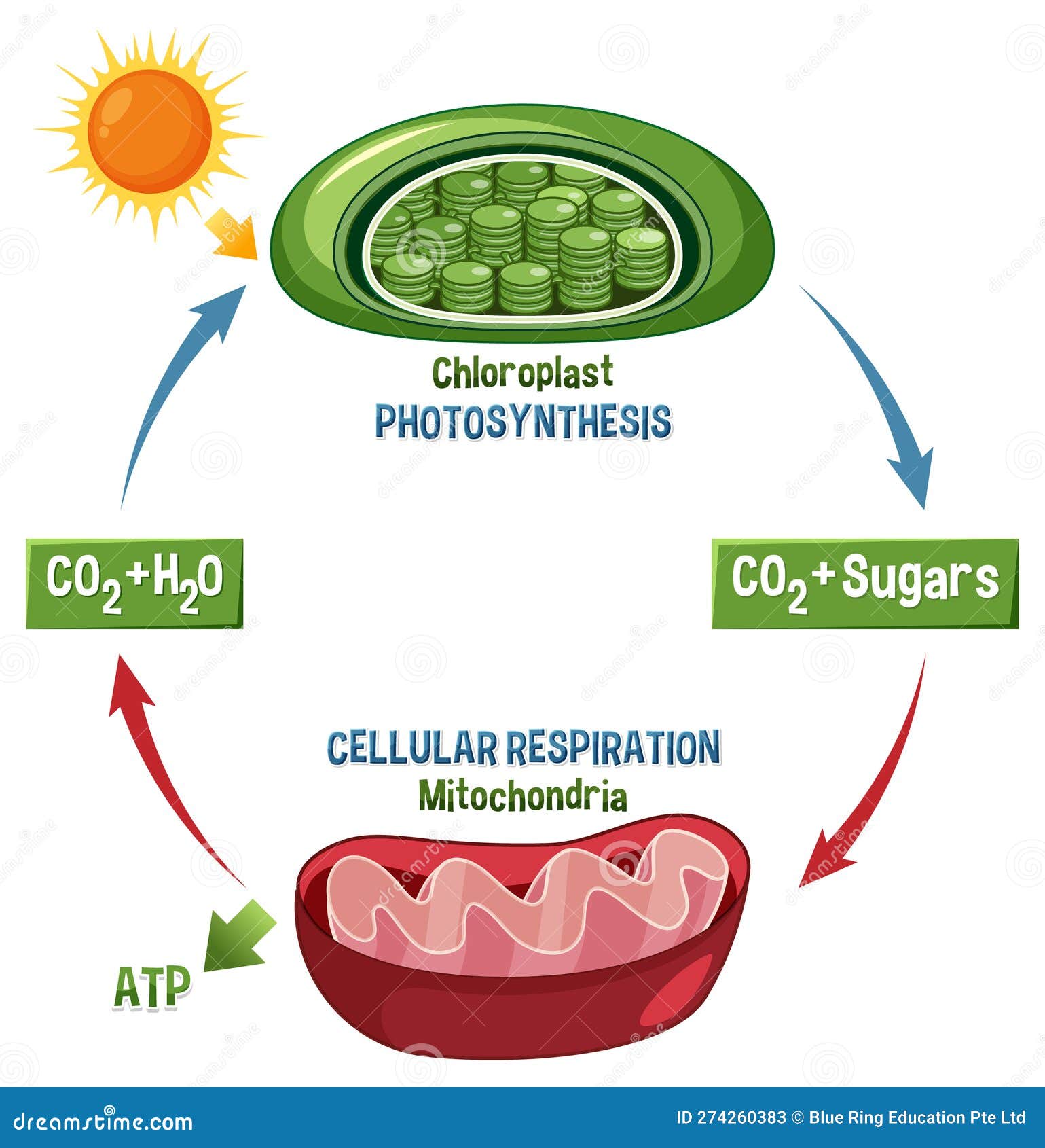
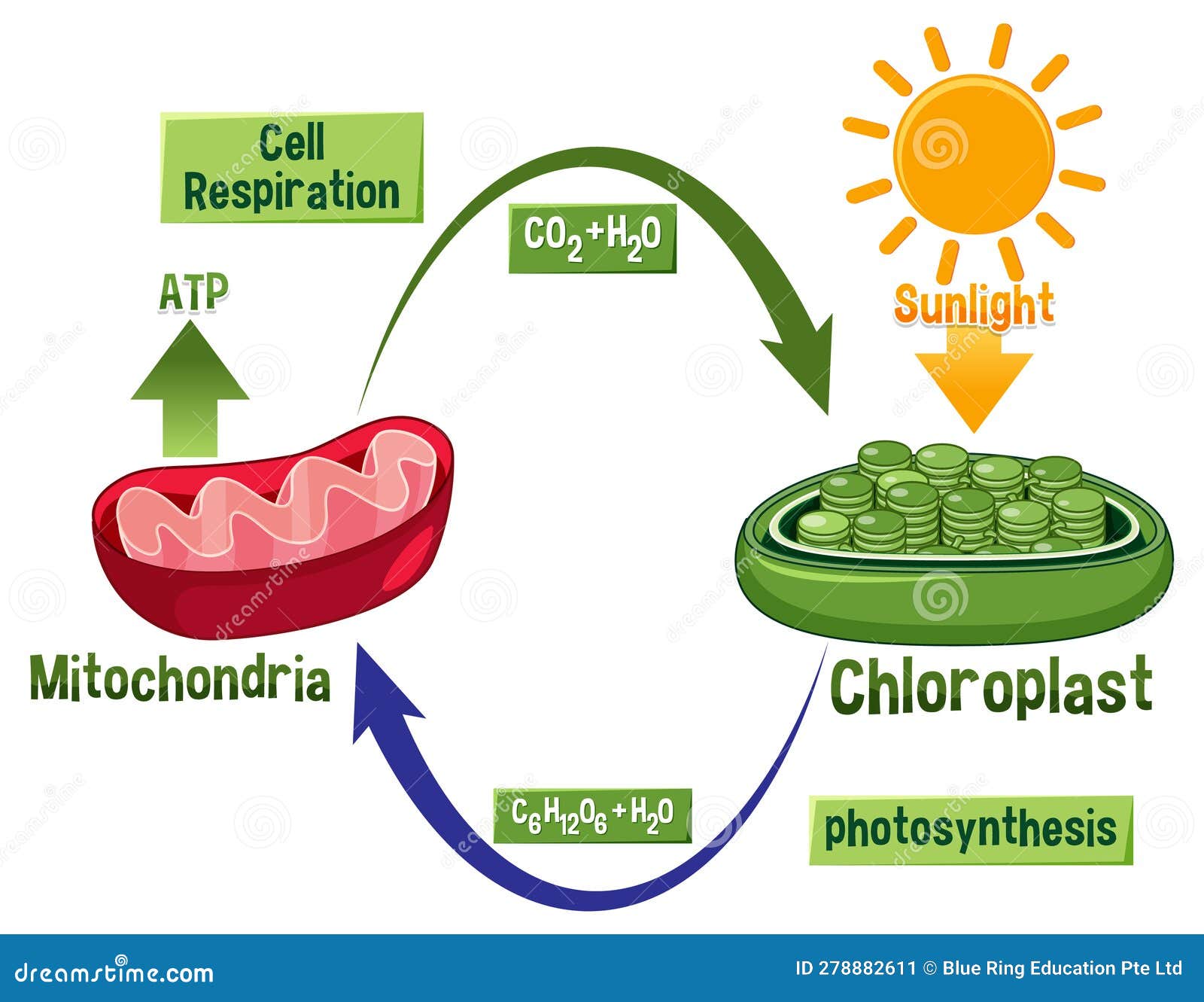
This article unpacks the equations, mechanisms, and quantitative relationships that underpin the fundamental energy economy of life, showing how organisms sustain themselves through this dual, dynamic cycle. The Equations: The Language of Energy Flow At the heart of photosynthesis and cellular respiration lie two chemical equations defined by their stoichiometric ratios and energy transformations: - **Photosynthesis**: $6\,\text{CO}_2 + 6\,\text{H}_2\text{O} + \text{light energy} \rightarrow \text{C}_6\text{H}_{12}\text{O}_6 + 6\,\text{O}_2$ This equation reflects the assimilation of carbon dioxide and water into glucose and oxygen, driven by sunlight captured by chlorophyll in chloroplasts. Energy from photons initiates redox reactions that save chemical energy in glucose’s molecular bonds.
- **Cellular Respiration**: $\text{C}_6\text{H}_{12}\text{O}_6 + 6\,\text{O}_2 \rightarrow 6\,\text{CO}_2 + 6\,\text{H}_2\text{O} + \textATP + \text{heat}$ Here, glucose is oxidized to carbon dioxide and water, releasing energy stored in high-energy phosphate bonds—primarily as adenosine triphosphate (ATP), the cell’s universal energy currency. This energy powers phenotypic expression, growth, and metabolic functions. While these equations appear distinct, they are inverse across biochemical domains: photosynthesis stores energy; respiration releases it.
Their integration sustains atmospheric oxygen and carbon cycles, forming life’s energetic foundation.
The Stoichiometric Precision
Both processes adhere to strict stoichiometric balances governed by conservation of atoms and energy. In photosynthesis, six molecules of carbon dioxide and six of water yield one glucose molecule, with six O₂ released—ensuring carbon, oxygen, and hydrogen atoms are conserved ($6C + 6O_2 + 6H_2O \rightarrow C_6H_{12}O_6 + 6O_2$).Similarly, cellular respiration consumes six carbons and six oxygens to regenerate six carbon dioxide and six water, producing six ATP molecules per glucose under ideal conditions—balancing redox equivalents through NADH and FADH₂ electron carriers that funnel energy into ATP synthesis. Mathematically, the net ATP yield (approximately 30–32 from one glucose) reflects the efficiency of translating light-derived energy into chemical work, mathematically grounded in Gibbs free energy changes ($\Delta G$) for each redox step. The precision underscores life’s evolutionary optimization.
The Redox Engine
The foundational redox chemistry differentiates photosynthesis and respiration. Photosynthesis is a reductive process: electrons are donated by water (oxidized to O₂) and accepted by CO₂ (reduced into glucose), powered by light. Its half-reactions illustrate: - Water oxidation: $2\,\text{H}_2\text{O} \rightarrow 4\,\text{H}^+ + 4\,\text{e}^- + \text{O}_2$ - Carbon fixation: $\text{CO}_2 + 2\,(\text{NADPH}) + 2\,\text{H}^+ \rightarrow \text{G3P} + \text{NADP}^+$ Cellular respiration reverses this: glucose oxidation releases electrons captured by NAD⁺ and FAD, which ferment to NAD⁺ and FAD, feeding the proton gradient across mitochondrial membranes to drive ATP synthase.This redox sawweb turns stored chemical energy into usable ATP, sustaining metabolic flux across cells.
The Metabolic Interdependence
Though separated by compartment and directionality, photosynthesis and cellular respiration form a closed loop in the biosphere. Excess glucose from autotrophs feeds heterotrophs; respired CO₂ rebounds to photosynthesis—closed in both carbon and oxygen cycles.Biologically, their rate equations converge: - Photosynthesis: $E = r_{\text{photo}} \cdot (C - C_{\text{sat}}) - E_{\text{photo}}$ (light-dependent and independent phase) - Respiration: $E_{\text{resp}} = q_{\text{resp}} \cdot (\text{C}_{\text{ress}} - E_{\text{resp}^{\text{max}}})$ Where $r$ is reaction rate, $E$ energy flow, and $C$ substrate concentration. These models quantify how organisms couple aerobic respiration with carbon fixation, ensuring metabolic synchrony across ecosystems.
Light intensity directly influences photosynthetic rate—up to saturation—while temperature and oxygen availability govern respiration. Kirchhoff’s laws of thermodynamics apply: energy conservation demands losses via heat, limiting net efficiency to 30–40% in both reactions. Photosynthesis maxes near 8–10% efficiency under ideal light, while respiration achieves minimal 30% ATP yield relative to glucose’s 2870 kJ/mol stored energy.
Stress conditions like drought or hypoxia disrupt electron transport and ATP synthesis, altering the equation’s balance.
Cellular respiration evolved as a rapid energy extractor, fueling activity across prokaryotes and eukaryotes alike. Together, these processes embody life’s fundamental energy economy: capturing, storing, and releasing energy with stoichiometric precision. As DNA encodes the enzymes driving these reactions, nature’s code remains written in equations that quantify life’s breath.
In every photosynthetic leaf and mitochondrial matrix, this silent energy dance continues, quietly driving the delicate balance of life on Earth.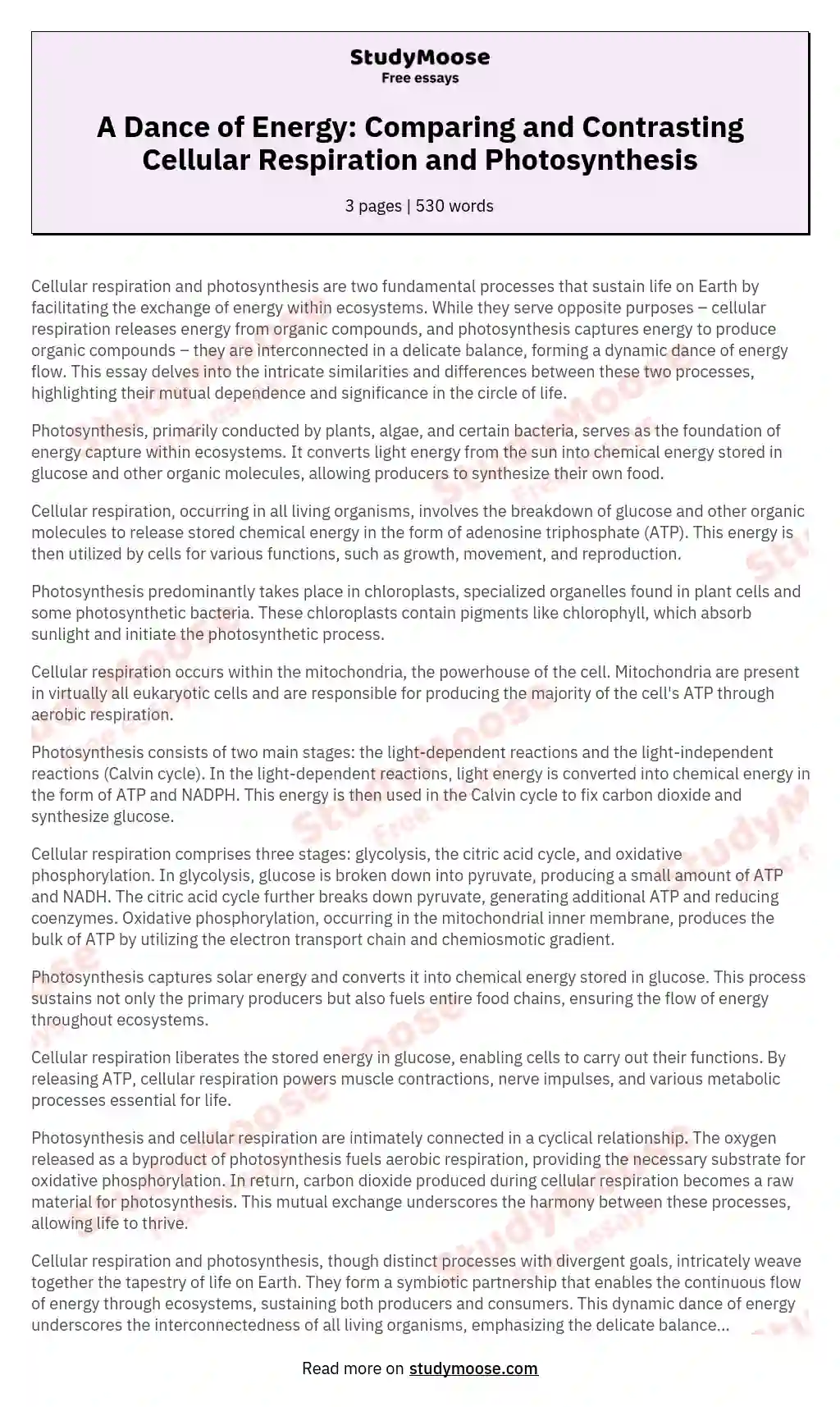

Related Post

Who Invented Takis Chips

Norske Vannressurser i vigtiglag: Enruktering ved kompleksoppdrettserie av udfordringer og dweller

The Ultimate 16K SP Tech Guide: How Solid-State Pressure Technology is Revolutionizing Digital Display and Interaction

Ahmad in the Bible: Unraveling a Unique Connection in Religious Context