Mood Meaning in Literature: The Unseen Emotional Architect of Narrative
Mood Meaning in Literature: The Unseen Emotional Architect of Narrative
The subtle infusion of mood in literature shapes how readers experience a story, transforming mere words on a page into immersive emotional journeys. Beyond surface plot and characterization, mood functions as the invisible thread that weaves atmosphere, tone, and psychological depth into every narrative fabric. Defined broadly, *mood* in literature denotes the emotional atmosphere conveyed through word choice, setting, dialogue, and descriptive detail—like a painter applying brushstrokes of feeling rather than only form.
This article explores how mood operates as a literary mechanism, transforming reader perception through deliberate, often subconscious cues embedded by skilled authors. Understanding mood requires distinguishing it from related aesthetic elements: while tone reflects authorial stance—well-irritated, wistful, detached—mood is the emotional environment resided in by the story itself. As literary critic Cleanth Brooks observed, “Every attitude in a work of art reflects an underlying emotional complex,” a sentiment that captures mood’s essential role in shaping reader engagement.
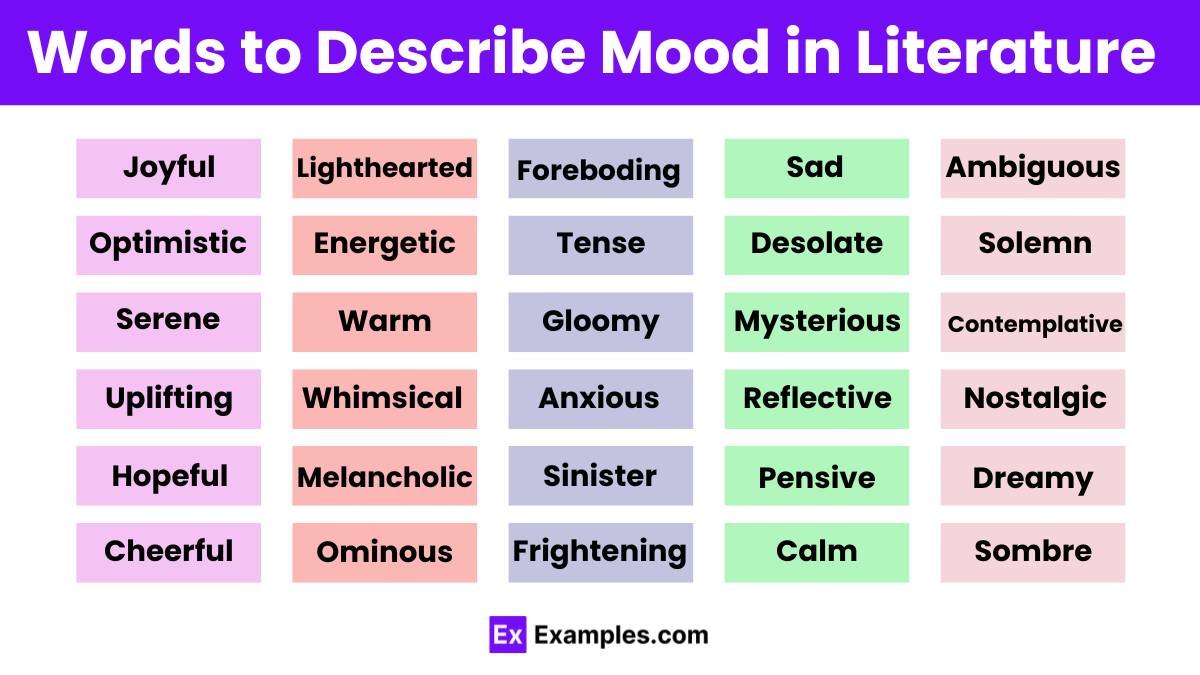
Whether ominous, melancholic, wistful, or electric with suspense, mood alters cognitive and emotional responses, anchoring memory and empathy in the reader’s consciousness.
The Architectural Elements of Literary Mood
A story’s mood is constructed through a layered interplay of stylistic and contextual elements. Writers manipulate language, setting, and narrative point of view to generate specific emotional textures.Consider the visceral dread in Shirley Jackson’s _The Lottery_: the idyllic summer afternoon, bright sunlight filtering through trees, juxtaposed with the ritualistic tension of the villagers, creates an uncanny dissonance. The calm exterior contrasts sharply with the story’s violent climax, a deliberate mood engineering that amplifies shock and prompting reflection. Key factors shaping literary mood include: - Setting and Atmosphere: Descriptions of place are foundational.
Gothic novels, such as Edgar Allan Poe’s _The Fall of the House of Usher_, depend on decaying mansions, shadow-drenched corridors, and oppressive weather to evoke psychological unease and impending doom. - Language and Diction: Word choice colors mood profoundly. The terse, clipped prose in Ernest Hemingway’s _A Farewell to Arms_ conveys exhaustion and emotional detachment, while the lush, sensory language in Gabriel García Márquez’s _One Hundred Years of Solitude_ births a dreamlike, cyclical mood infused with magical realism.
- Imagery and Symbolism: Visual, auditory, and olfactory imagery anchor mood in the reader’s sensory imagination. In F. Scott Fitzgerald’s _The Great Gatsby_, the green light at the end of Daisy’s dock—brilliant, elusive, radiant—functions not only as a symbol of longing but as a mood-maker that evokes yearning and disillusionment.
- Narrative Voice and Perspective: First-person accounts, like those in Henry James’s _The Turn of the Screw_, can distort mood through subjective perception, blurring reality and paranoia. Third-person limited view, conversely, may build suspense by withholding emotional clarity. - Pacing and Syntax: Short, staccato sentences accelerate tension—sharpened in wartime narratives—while long, flowing sentences invite introspective calm.
Virginia Woolf’s stream-of-consciousness writing in _Mrs Dalloway_ stretches time and emotion, creating a mood of fleeting consciousness and quiet melancholy. These elements work in concert, each reinforcing the story’s emotional undercurrent. As decomposer of experience, literary mood does not merely accompany plot—it propels it by aligning reader sensibility with narrative intent.
Mood as Emotional Catalyst: Engaging the Reader Deeply
Beyond atmospheric function, mood acts as a powerful emotional catalyst, guiding reader identification, judgment, and sustained investment in the story. When a narrative mood successfully resonates, it transcends description to trigger visceral response. Consider the melancholic tone in Toni Morrison’s _Beloved_, where fragmented memories and spectral echoes produce a mournful mood that compels empathetic engagement with trauma.The mood does not just describe sorrow—it embodies it, embedding readers within the characters’ psychological landscapes. Psychologically, mood influences emotional contagion—the phenomenon where readers “catch” feelings evoked by characters or settings. A tense, claustrophobic atmosphere in a thriller subtly elevates reader heart rate and anxiety, enhancing the immersive experience.
Conversely, serene and tender moods induce relaxation and emotional openness, facilitating deeper connection with character arcs. Mood also alters narrative temporality and perception. In modernist works like T.S.
Eliot’s _The Waste Land_, shifting moods across fragmented sections mirror psychological disarray, immersing readers not just in story but in fragile states of consciousness. This alignment of mood with internal experience transforms literature into a mirror reflecting the psyche. Moreover, mood variation throughout a work—overcoming or complicateding sadness, suspense yielding to release—provides emotional rhythm, sustaining attention and rewarding reader investment.
A story’s mood is thus not static decoration but a dynamic, guiding force that shapes how meaning is constructed and felt.
In essence, mood in literature functions as the unsung architect of emotional resonance—crafted through deliberate linguistic and structural choices that shape reader experience from initial immersion to lasting impact. By calibrating atmosphere, diction, and pacing, authors sculpt interior worlds that mirror, challenge, and extend the human emotional spectrum.
Understanding mood reveals literature not as a passive narrative container, but as an active, immersive force that speaks directly to the heart. This insight deepens literary analysis, revealing how mood is both a technical achievement and a profound conduit between text and reader conscience.

Related Post

Trump vs Harris Polls at 538: What the Numbers Reveal About Shifting Political Currents
Oroscopo Di Marzo Per La Bilancia: Come Bilanciare Amore, Lavoro e Salute Senza Perdere Altro

The Mind-Bending Yoga Challenge That’s Turning Gamers into Yoga Enthusiasts: The Inside of the google Cat Game

Unveiling The Art And Impact Of Monica Seeman: The Visionary Behind a Cultural Revolution


