Photosynthesis and Cellular Respiration: The Dual Engines of Life’s Energy Cycle
Photosynthesis and Cellular Respiration: The Dual Engines of Life’s Energy Cycle
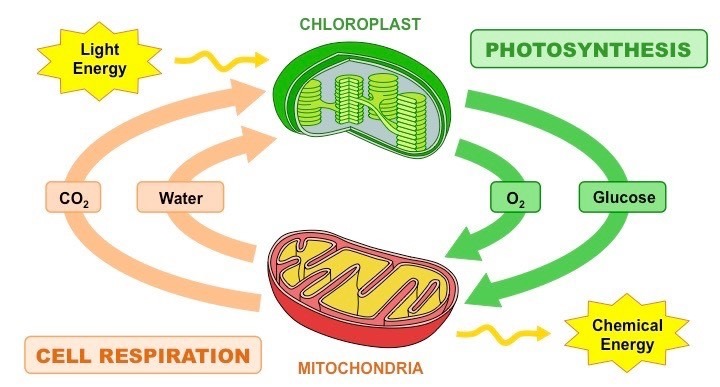
At the heart of biological energy transformation lies a dynamic interplay between photosynthesis and cellular respiration—two complementary biochemical processes that sustain life on Earth. While photosynthesis captures and stores solar energy in biochemical form, cellular respiration releases that stored energy to fuel cellular functions. Together, they form a self-sustaining cycle: carbon dioxide and water are transformed into glucose and oxygen by plants and algae, and glucose is broken down to release energy, carbon dioxide, and water by nearly all living organisms.
Understanding their chemical equations reveals not just the mechanics of energy flow but the elegance of metabolic continuity. The fundamental biochemical reactions powering photosynthesis and cellular respiration can be captured in concise chemical formulas, illustrating the precise transfer of atoms and energy. These equations unify plant and animal metabolisms, showing how energy flows directionally—and cyclically—through ecosystems.
The Light-Dependent Reactions and the Chemical Equation for Photosynthesis
Photosynthesis begins with the light-dependent reactions, where chlorophyll-containing pigments in plant chloroplasts absorb sunlight. This energy drives the conversion of carbon dioxide and water into glucose, alongside oxygen as a byproduct. The overarching chemical equation for photosynthesis is: 6CO₂ + 6H₂O + light energy → C₆H₁₂O₆ + 6O₂ This equation encapsulates a process that transforms inorganic molecules into organic nourishment, powered by photons from the sun.Each component plays a critical role: carbon dioxide serves as the carbon backbone, water supplies electrons and protons, and sunlight provides the energy catalyst.
Within the thylakoid membranes of chloroplasts, the reaction centers of Photosystem II and Photosystem I orchestrate a cascade of electron transfers. Water molecules undergo photolysis—splitting into oxygen gas, positively charged hydrogen ions (protons), and electrons.
These electrons move through an electron transport chain, generating ATP and NADPH—high-energy carriers essential for the next phase.
Oxygen Release: A Crystalline Signature of Life
The oxygen released during photosynthesis is vital for aerobic respiration in animals, fungi, and many microbes. “Photosynthesis is Earth’s greatest oxygen producer,” notes Dr. Elena Rodriguez, a biologist at the University of Green Energy Systems.“Every breath we take stems from these sensitively tuned reactions in plant leaves and phytoplankton.”
This chemical transformation directly supports aerobic life across the planet. In addition to oxygen, the glucose produced fuels growth, storage, and metabolic activity. Thus, among the four states in the simplified chemical equation for photosynthesis, oxygen’s release is both a measurable output and a life-sustaining service.
The Glycolysis and Citric Acid Cycle: Liver’s Cornerstone—Cellular Respiration
While photosynthesis builds energy-rich glucose from small molecules, cellular respiration dismantles glucose to liberate energy stored in chemical bonds.This catabolic process operates in three main stages: glycolysis, the citric acid cycle (Krebs cycle), and oxidative phosphorylation. The complete chemical equation for cellular respiration—encompassing these steps—is: C₆H₁₂O₆ + 6O₂ → 6CO₂ + 6H₂O + energy (ATP)
This reaction—reversed compared to photosynthesis—demonstrates the oxidation of glucose in the presence of oxygen, producing carbon dioxide, water, and usable energy in ATP form. The equation highlights a biochemical summation of energy transfer from raw sugar to usable cellular currency.
The process unfolds in multiple compartments: glycolysis occurs in the cytoplasm, extracting limited energy from a six-carbon glucose molecule, while the Krebs cycle and electron transport chain in mitochondria amplify output through enzymatic precision.
Each step engages coenzymes like NAD⁺ and FAD, which shuttle electrons and protons, driving proton gradients that power ATP synthase.
“Cellular respiration is the engine that keeps every living cell functional,” explains Dr. Marcus Chen, a cellular biochemist. “Even in darkness, cells convert nutrients into usable energy efficiently.” This metabolic flexibility underpins the survival of complex organisms across environments and activity levels.
Oxygen: The Unseen Catalyst Crucially, oxygen ranks as both a reactant and a bystander in this cycle. In respiration, it acts as the terminal electron acceptor in the electron transport chain, enabling the formation of water. “Oxygen’s role is irreplaceable—it completes a chemical cascade that fuels life,” says Dr.
Chen. Meanwhile, in photosynthesis, oxygen’s release signals successful energy storage, completing a global carbon and oxygen balance sustained over millennia.
The reverse of photosynthesis—respiration—thus forms a mirror to its consister, turning stored chemical energy back into ATP and returning carbon dioxide and hydrogen to the atmosphere.
This reciprocal flow sustains equilibrium: plants absorb carbon dioxide and release oxygen, while animals consume oxygen and return carbon dioxide for new photosynthetic cycles.
Environmental Interdependence This paired system reveals profound ecological interdependence. Phytoplankton in oceans contribute significantly to global photosynthesis, while forests and crops supply oxygen and organic matter for respiration across ecosystems. Deforestation disrupts oxygen production, while urban carbon emissions challenge natural respiration balance—both human-induced shifts underscoring the fragility and centrality of this metabolic loop.In agricultural and climate science, optimizing photosynthetic efficiency through genetic engineering or cultivating oily algae aims to enhance both food production and carbon sequestration. Simultaneously, strategies to lower excessive cellular respiration in metabolic disorders seek to improve energy use at the cellular level, demonstrating medical relevance beyond environmental impact. From Sunlight to ATP: The Unified Story The chemical equations for photosynthesis and cellular respiration—not abstract formulas, but living narratives—reveal a continuous, cyclical exchange of energy and matter.
Beginning with solar input into plant cells and culminating in ATP-driven cellular functions, these reactions bridge the realms of autotrophs and heterotrophs. Each transformation—oxidation, reduction, energy coupling—follows precise thermodynamic principles, ensuring net gain and sustainability. “This cycle operates at the edge of chaos,” says Dr.
Rodriguez. “A slight disruption can unbalance ecosystems, while even minor enhancements in photosynthetic efficiency or respiratory regulation can have cascading effects.” Understanding these equations, therefore, goes beyond academic interest: it informs climate policy, agricultural innovation, and medical research.
The dual equations—photosynthesis and respiration—form a cornerstone of life’s biochemistry.
They embody transformation, regulation, and regeneration. They are not isolated processes but threads in a vast, interconnected web of energy flow sustaining every dynamic organism on Earth.


Related Post

Exploring Fipfap.com: Your Ultimate Guide to Free, High-Quality Online Entertainment

Inakalanda: Where Ancient Wonder Meets Profound Significance

The Great Question: Is Hero of Kvatch Really of Imperial Blood?

Charlie Kirk’s Father: The Quiet Architecture Behind a Modern Conservative Voice


