What Is Carrying Capacity? The Science Defining Earth’s Max Sustainable Population
What Is Carrying Capacity? The Science Defining Earth’s Max Sustainable Population
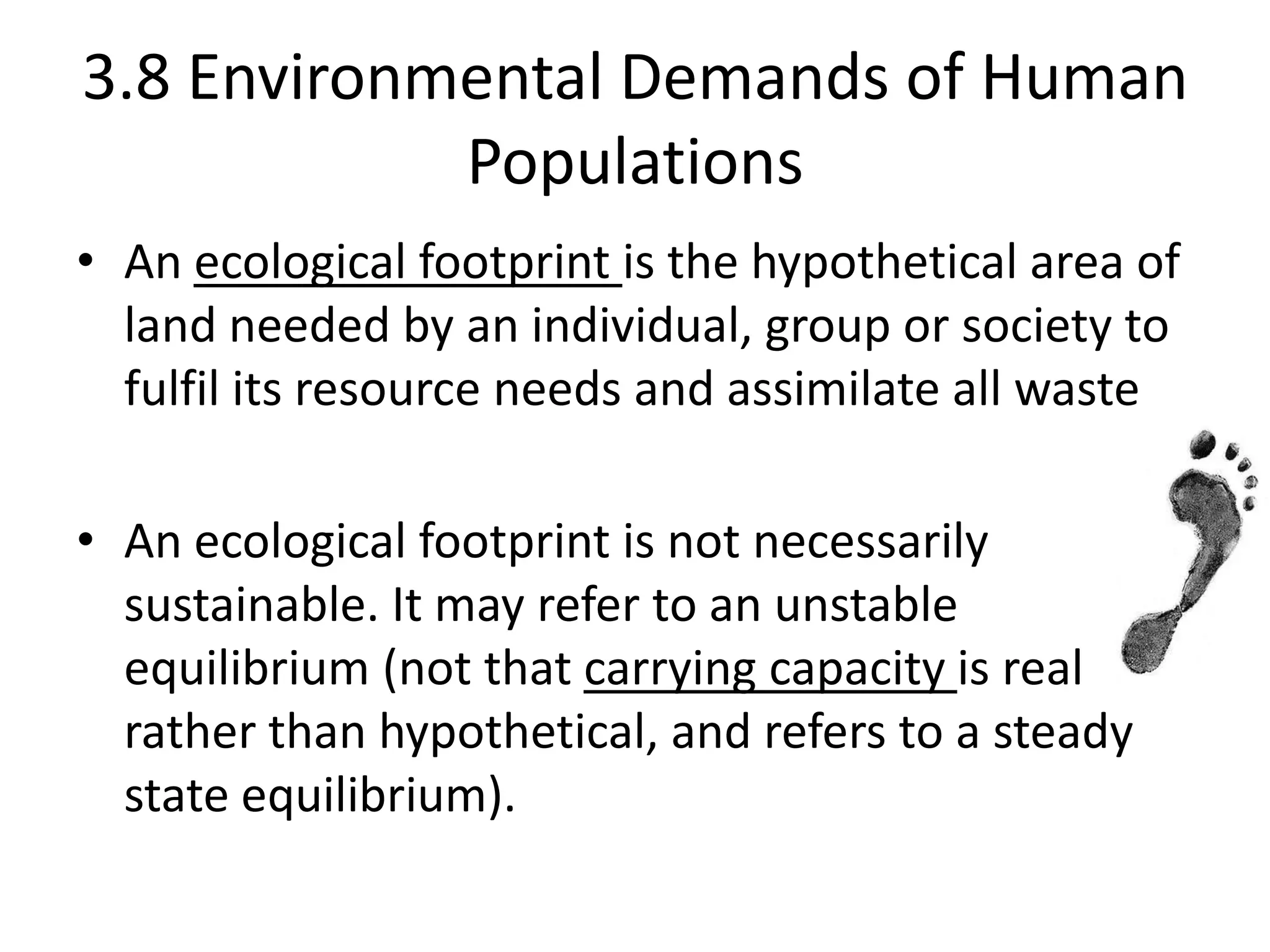
The concept of carrying capacity lies at the heart of environmental science and ecological planning, representing the maximum population size an environment can indefinitely sustain given available resources and ecological conditions. Defined precisely as “the largest population of a species an environment can support sustainably without degrading resources,” carrying capacity is not static—it fluctuates with resource availability, technological innovation, and human behavior. Understanding this threshold is critical in shaping policies on urban planning, agriculture, wildlife conservation, and global sustainability efforts.
Carrying capacity applies across diverse systems—from marine ecosystems to densely populated cities—each governed by interdependent factors such as food supply, water availability, shelter, waste absorption, and biodiversity. As the global population surges toward 8 billion and beyond, scientific scrutiny of carrying capacity intensifies. As ecologist William Rees explains, “Carrying capacity is not a fixed number but a dynamic balance shaped by consumption patterns, technology, and governance.” This fluidity underscores the complexity of assessing and managing ecological limits in an era of climate change and rapid development.
The Core Definition: Environmental Limits Explained
At its essence, carrying capacity quantifies the ecological envelope within which a population can survive and reproduce without triggering resource depletion or environmental collapse. It integrates biomesse—biological needs—with material inputs and waste outputs. For human populations, key determinants include: - **Food and Water Security**: Agricultural yield, freshwater access, and supply chain resilience.Regions with limited arable land or drought vulnerability face lower carrying capacities. - **Energy and Infrastructure**: Energy availability powers modern systems; without sustainable energy, population support becomes untenable. - **Waste Absorption**: Ecosystems’ capacity to absorb pollution, absorb excess CO₂, process sewage, and recycle nutrients dictates long-term viability.
- **Land and Habitat Space**: Housing, farming, ecosystems, and biodiversity corridors consume physical space and alter natural balances. The interplay of these factors creates thresholds beyond which degradation occurs—soil erosion, desertification, species extinction, and pollution spikes—ultimately undermining the very capacity to support life.
Wildlife Carrying Capacity: Lessons from Natural Ecosystems
In wild environments, carrying capacity governs species survival and population dynamics.Unlike human systems, natural populations experience intrinsic feedback loops that often stabilize numbers over time. Predators, disease, food scarcity, and habitat limits naturally prevent overpopulation. For example, in Yellowstone National Park, wolf reintroduction demonstrated how apex predators regulate herbivore populations—directly influencing vegetation recovery, riverbank stabilization, and overall ecosystem health.
This phenomenon epitomizes the concept’s role as a self-regulating ecological balance. Carrying capacity in wildlife extends beyond numbers to resource quality and distribution. In African savannas, elephant herds adjust seasonally based on water access and browse availability, avoiding unsustainable pressure on local flora.
Such adaptive behaviors highlight nature’s inherent resilience—so long as human intervention does not disrupt these natural equilibria. However, human expansion often collapses these balances: habitat fragmentation, invasive species, and climate-induced resource shifts destabilize even robust natural carrying capacities.
Human Carrying Capacity: Population, Resources, and Innovation
Human carrying capacity diverges sharply from animal models due to technological advancement and cultural innovation.Agriculture, urbanization, and industrial systems have dramatically expanded Feeding, housing, and energy potential—partly lifting effective limits. Yet, these gains demand exponential resource throughput, straining global systems. According to the United Nations, current global carrying capacity for humans is estimated between 8 to 16 billion, depending on lifestyle, technology, and environmental policies.
Key drivers reshaping human carrying capacity include: - **Agricultural Intensity**: High-yield farming and genetic crop improvements boost food output per hectare, but often at ecological cost—soil depletion, pesticide runoff, and water overuse undermine sustainability. - **Energy Transitions**: Fossil fuel dependency drives carrying limits through climate change, while renewable adoption offers pathways to decouple population support from carbon emissions. - **Urban Efficiency**: Compact cities reduce per


Related Post

How to Add a Picture to a PDF: Precision, Simplicity, and Professional Results

Did One Chrisley Family Member Pass? Tragic Loss Adds to Years of Misfortune for the Chrisleys

Walking With God: How a Powerful PowerPoint Transforms Spiritual Journeys

The Dark Truth: Paul Walker’s Disturbing Secret Revealed